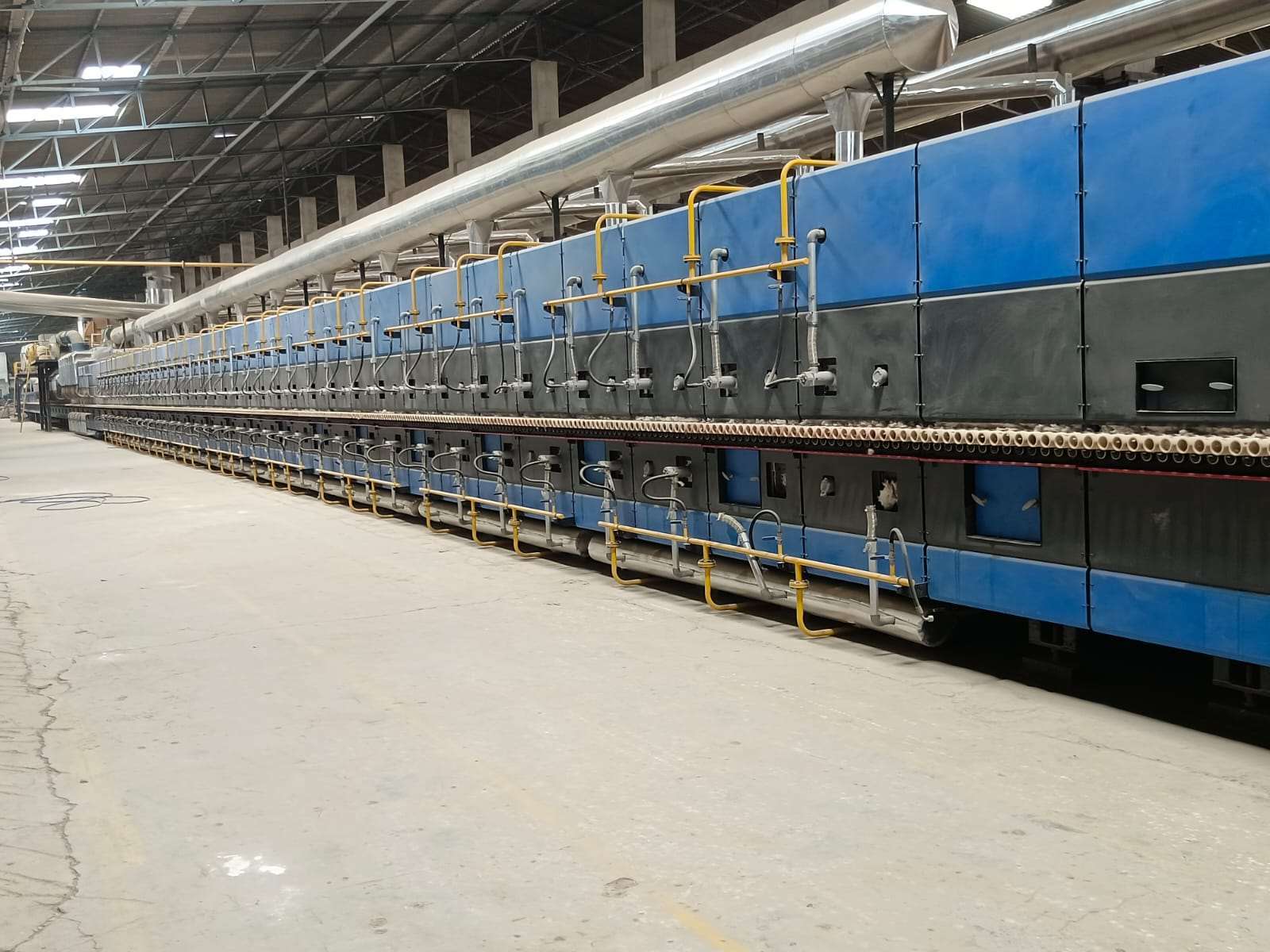
Fuel is one of the largest operating costs in tile production. These are the measures that make the biggest difference in roller kilns and dryers.
1. Control the air/gas ratio on every burner set
Excess combustion air has to be heated and then leaves through the chimney, taking energy with it. Monitoring and controlling the ratio for each burner set, rather than for the whole kiln, avoids that waste.
2. Limit each burner's working range
Setting minimum and maximum air flow rates per zone keeps burners working where they are most efficient.
3. Use recipes for product changeovers
Manual readjustment after a changeover wastes fuel and creates second-choice tiles. Recipe-based control resets every burner automatically.
4. Recover cooling-zone air for the dryers
The cooling zone produces large volumes of clean hot air. Ducting it into the dryers can cut drying fuel sharply, and to zero in a "0 Fuel" five layer dryer.
5. Recover heat from the fume chimney
A heat exchanger on the fume chimney can preheat air or supply heat elsewhere in the plant.
6. Keep the kiln fully loaded
Gaps in loading waste energy. Steady, full-width loading from the dryer and glazing line keeps fuel per m² down. Wider kilns also lose less heat per m² through their walls (see width vs length).
7. Maintain insulation and seals
Damaged insulation, open inspection ports and poor seals at the entry and exit let heat escape. Include them in routine maintenance.
8. Keep burners clean and tuned
Dirty or poorly adjusted burners give uneven flames and higher consumption. Regular inspection pays for itself.
Want to know how much your plant could save? Contact our team for a kiln and dryer review.