Introduction
In modern ceramic manufacturing, energy consumption is one of the highest operational costs. With environmental standards rising and fuel prices fluctuating, tile manufacturers are constantly seeking ways to increase fuel efficiency. Traditional kilns release a massive amount of thermal energy into the atmosphere through chimneys and cooling sections. Today, advanced heat recovery systems are transforming this waste heat into massive cost savings.
The Role of Cooling Air Recovery
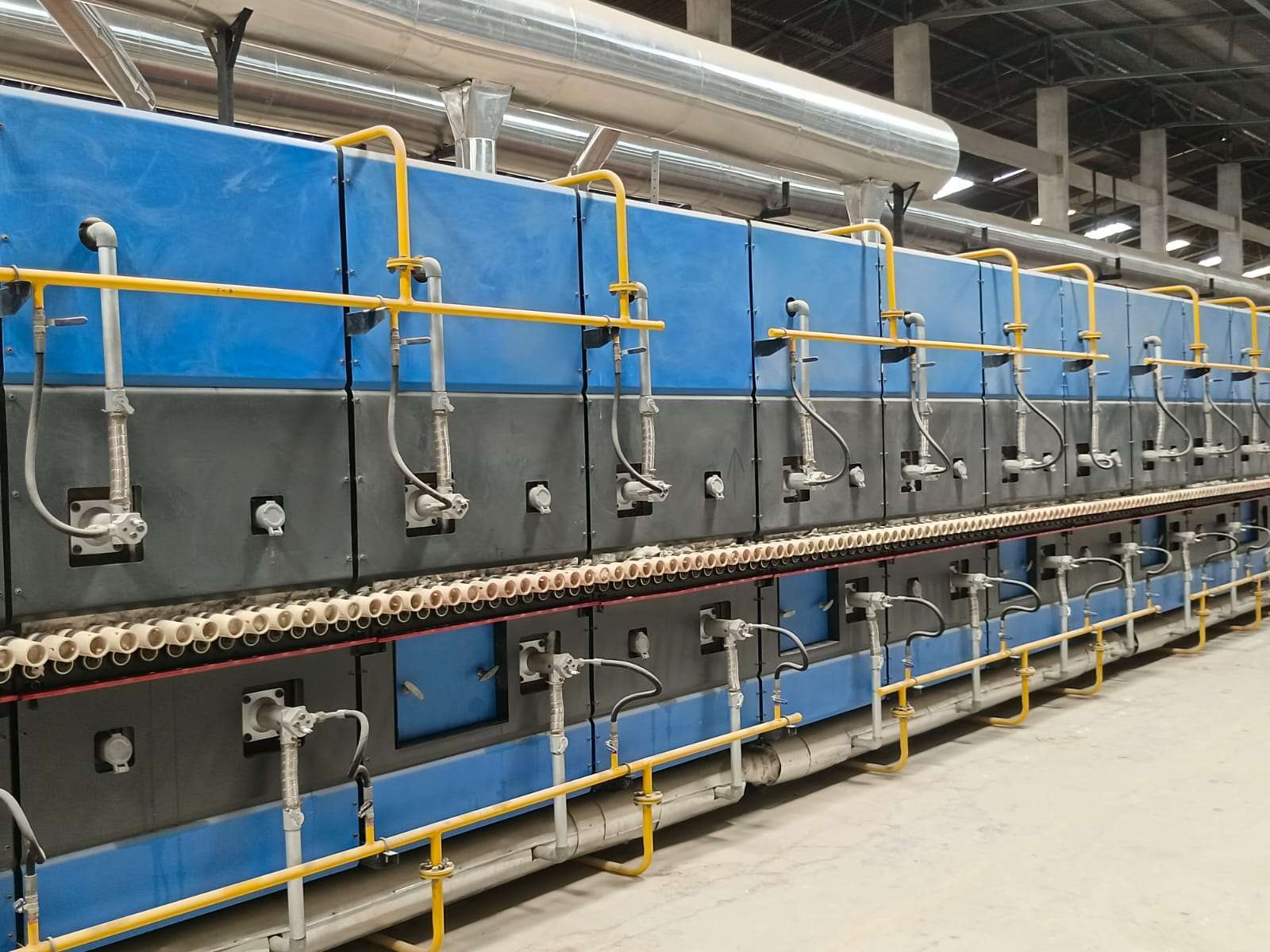
A significant amount of energy is used during the firing phase of ceramic tiles. However, as the tiles enter the cooling zone, a large volume of hot air is generated. In JAYGANESH Roller Kilns, this cooling air is captured and redirected. Instead of letting this thermal energy escape, it is channeled directly to run multi-layer dryers or preheat combustion air. By utilizing a heat exchanger, waste heat from the fume chimney can also be reclaimed, bringing thermal efficiency to a maximum.
Digital Burners and Recipe Management
Another major leap in kiln design is digital burner control. By monitoring temperatures, air-gas ratios, and flow rates for individual zones, operators can limit the working range of each burner set. In the latest JAYGANESH digital kilns, changing recipes automatically adjusts the air-gas ratio across all burners. This level of control reduces fuel consumption, minimizes waste, and ensures that the percentage of first-class products remains consistently near 100%.
Conclusion
Investing in energy-efficient ceramic machinery is no longer just an environmental choice—it is a financial necessity. By integrating advanced heat recovery and digital controls, modern tile factories can cut fuel costs substantially while maintaining the high quality of their finished floor, wall, and slab tiles.