Tile buyers and regulators increasingly ask about the carbon footprint of ceramic products, and most of that footprint comes from firing and drying. Here is where the technology stands.
Step one: use less energy
The cheapest CO₂ reduction is fuel that is never burned. Precise air/gas control, cooling-air recovery into the dryers and other efficiency measures cut emissions today with proven technology.
Hydrogen and hydrogen blends
Hydrogen produces no CO₂ when it burns. Blending it into natural gas is the most practical first step, because existing kilns can be adapted gradually. Hydrogen burns faster and hotter than methane and has a different flame shape, so burners and controls must be designed or adapted for it, and NOx emissions must be managed.
Electric heating
Electricity from renewable sources can supply heat with no on-site emissions. It is most practical first in dryers and lower-temperature zones. High-temperature firing with electricity alone is still being developed for large tile kilns.
Other carbon-free fuels
Researchers have also demonstrated a roller kiln firing ceramic tiles on pure ammonia (Energy & Fuels), showing that carbon-free firing is technically possible.
Our research paths
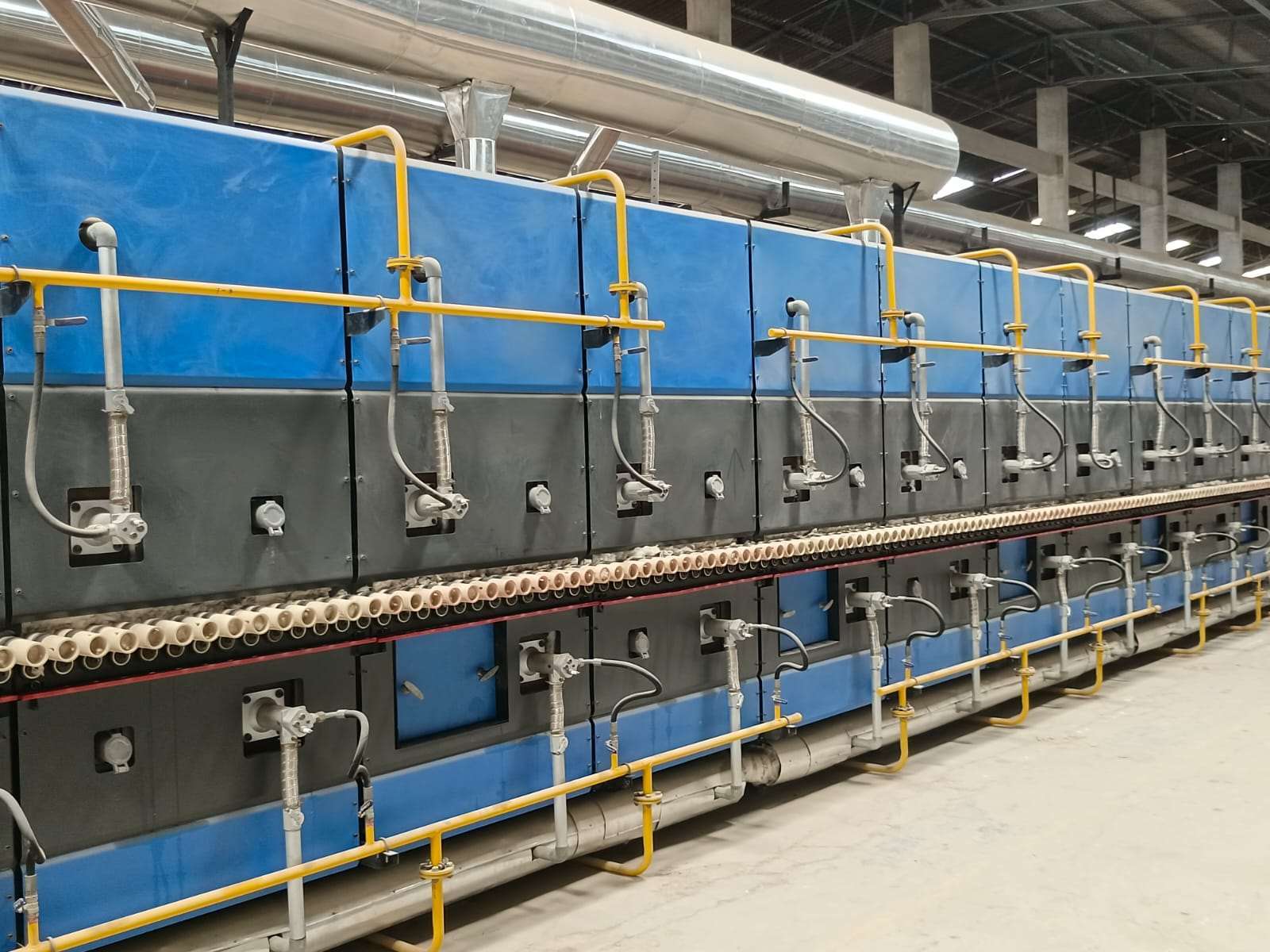
Jayganesh Machinery is working on two paths: electricity, and hydrogen including hydrogen mixed with methane. Our kilns already offer heat recovery and digital combustion control, the foundation for any low-carbon upgrade. Explore our roller kilns or discuss your decarbonisation plans with us.