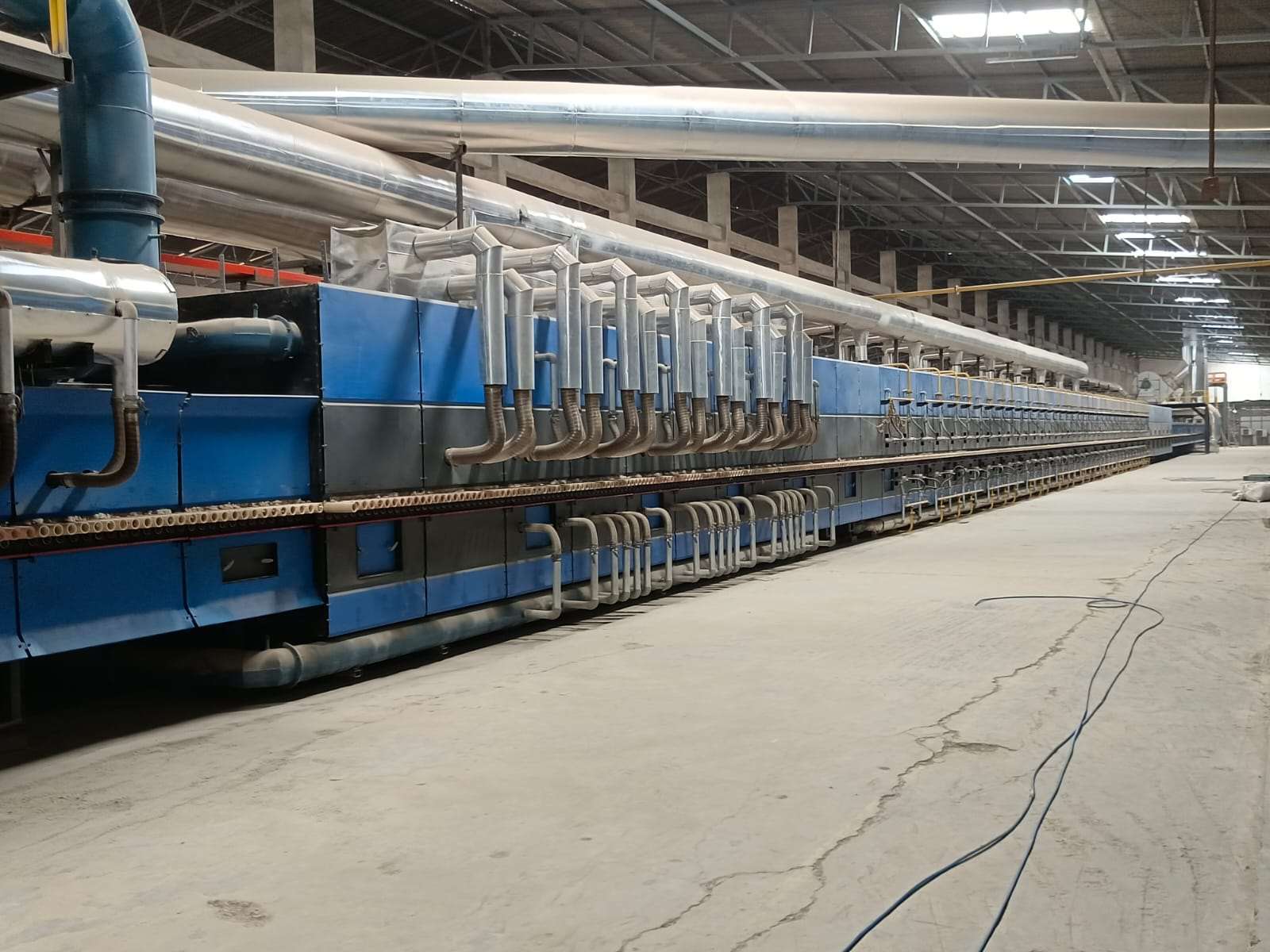
A roller kiln is the largest single investment in a tile plant and it sets the limit on how much the whole line can produce. Choosing the wrong size or specification is expensive to correct. Here are the questions we work through with every customer before designing a kiln for slab and large-format tiles.
1. What daily capacity do you need?
Kiln output depends on how many square metres of tile are inside the kiln at once and how long each tile stays inside (the firing cycle). A simple estimate:
Daily output (m²/day) ≈ useful width (m) × kiln length (m) × loading factor × 1,440 ÷ cycle time (minutes)
For example, a kiln with 3.0 m useful width, 300 m length, a loading factor of 0.85 and a 60-minute cycle gives roughly 3.0 × 300 × 0.85 × 1,440 ÷ 60 ≈ 18,000 m² per day. Real figures depend on tile format, thickness and body composition, so treat this as a starting point.
2. Wider or longer?
The same capacity can come from a long, narrow kiln or a shorter, wider one. Wider kilns need a shorter building and lose less heat through the walls per square metre fired, but they demand very even temperature across the width and strong rollers. See our article on kiln width versus length, and our ultra-wide roller kiln.
3. Which formats will you fire, now and later?
Slab formats need wide, flat, stable roller planes and careful control in the pre-heating and cooling zones to avoid warping and cracks. Plan the kiln width around the largest format you expect to make within the kiln's life, not just today's.
4. How precise is the burner control?
Look for control of temperature, flow rate and air/gas ratio for each burner set, with recipes that readjust the kiln automatically at product changeover. Precise control is what keeps the share of first-choice tiles high and fuel use low.
5. How is heat recovered?
Hot air from the cooling zone can run your dryers, and a heat exchanger can recover heat from the fume chimney. With a multi-layer dryer such as our five layer dryer, drying fuel can fall to zero.
6. Which fuel?
Natural gas and LPG are standard. If decarbonisation matters to your customers, ask about hydrogen blending as a future option.
7. Who will support it?
A kiln runs 24 hours a day for many years. Check who will install and commission it, how quickly engineers can reach your plant and how spare parts will be supplied.
Next step
Send us your target capacity, tile formats and fuel and we will propose a kiln layout. Request a kiln proposal.